Search This Blog

Showing posts with label Computer. Show all posts

Monday, 12 December 2011

Linux Complete Command Reference by John Purcell - LINKS UPDATED

Linux Complete Command Reference 
by John Purcell


Compiled by Red Hat Software, Inc., the company that has assembled the most popular x86 installation of Linux, this command reference is massive, authoritative, and as complete as any reference can be.
In 1,500 pages of tiny print, this heavy-duty tome documents every command, utility, file system, library function, and administration tool in the operating system. Linux also features a detailed kernel reference guide and a good index. And if the print size bothers you, the entire contents of the book are included on the companion CD-ROM, along with the Unix version of the Adobe Acrobat reader. In Acrobat, you can adjust the font size to something more readable. If you're running a Linux system and acting as your own system administrator, Linux: Complete Command Reference is an indispensable reference.


Thursday, 8 December 2011


Smashing CSS: Professional Techniques for Modern Layout by Eric Meyer - LINKS UPDATED

Smashing CSS: Professional Techniques for Modern Layout 
by Eric Meyer


PROFESSIONAL TECHNIQUES FOR MODERN LAYOUT
Smashing CSS takes you well beyond the basics, covering not only the finer points of layout and effects, but introduces you to the future with HTML5 and CSS3. Very few in the industry can show you the ins and outs of CSS like Eric Meyer and inside Smashing CSS Eric provides techniques that are thorough, utterly useful, and universally applicable in the real world. From choosing the right tools, to CSS effects and CSS3 techniques with jQuery, Smashing CSS is the practical guide to building modern web layouts.
With Smashing CSS you will learn how to:
  • Throw elements offscreen/hide them
  • Create body/HTML backgrounds in XHTML
  • Usemore than 15 layout techniques including clearfix, two/three simple columns, faux columns, One True Layout, Holy Grail, em-based layout, fluid grids, sticky footers, and more
  • Use a variety of CSS effects including CSS popups, boxpunching, rounded corners, CSS sprites, Sliding Doors, Liquid Bleach, ragged floats, and more
  • Apply CSS table styling including using thead, tfoot, and tbody, row headers, column-oriented styling (classes); styling data tables with jQuery, tables to graphs, tables to maps; and more
  • Use CSS3 elements including rounded corners, multiple backgrounds, RGBA, using jQuery to do CSS3 selections and so much more.
Eric Meyer is an internationally recognized expert on the subjects of HTML, CSS, and Web standards, and has been working on the Web since 1993. Smashing CSS is for developers who already have some experience with CSS and JavaScript and are ready for more advanced techniques.
Smashing Magazine (smashingmagazine.com) is one of the world's most popular web design sites. True to the Smashing mission, the Smashing Magazine book series delivers useful and innovative information to Web designers and developers.


Friday, 2 December 2011

HTML5 & CSS3 For The Real World - Estelle Weyl, Louis Lazaris, Alexis Goldstein

HTML5 & CSS3 For The Real World 
         - Estelle Weyl, Louis Lazaris, Alexis Goldstein
HTML5 and CSS3 for the Real World is ideal for any web designer or developer who wants to start using the latest generation of web technologies in their everyday work.
This book will teach you how to:
  • understand the new semantic markup available in HTML5
  • use CSS3 to make sites beautiful without sacrificing clean markup or resorting to complex workarounds
  • employ native HTML5 video and audio in your pages
  • use web fonts to enrich a site's typography
  • make web applications accessible using WAI-ARIA
  • make the most of the new HTML form elements.
This easy-to-follow guide is illustrated with lots of examples, and leads readers through the process of creating great websites from start to finish using HTML5 and CSS3. It also features:
  • details on all the new HTML5 and CSS3 elements and features
  • information on the current level of browser support

Tuesday, 29 November 2011

Beginning Java 7 - Jeff Friesen

Beginning Java 7 
                                 - Jeff Friesen
Beginning Java 7 guides you through this language and a huge assortment of platform APIs according to the following table of contents:

Chapter  1: Getting Started with Java
Chapter  2: Discovering Classes and Objects
Chapter  3: Exploring Advanced Language Features
Chapter  4: Touring Language APIs
Chapter  5: Collecting Objects
Chapter  6: Touring Additional Utility APIs
Chapter  7: Creating and Enriching Graphical User Interfaces
Chapter  8: Interacting with Filesystems
Chapter  9: Interacting with Networks and Databases
Chapter 10: Parsing, Creating, and Transforming XML Documents
Chapter 11: Working with Web Services
Chapter 12: Java 7 Meets Android
Appendix A: Solutions to Exercises
Appendix B: Scripting API and Dynamically Typed Language Support
Appendix C: Odds and Ends
Appendix D: Applications Gallery

Chapter 1 introduces you to Java and begins to cover the Java language by focusing on fundamental concepts such as comments, identifiers, variables, expressions, and statements.

Chapter 2 continues to explore this language by presenting all of its features for working with classes and objects. You learn about features related to class declaration and object creation, encapsulation, information hiding, inheritance, polymorphism, interfaces, and garbage collection.

Chapter 3 focuses on the more advanced language features related to nested classes, packages, static imports, exceptions, assertions, annotations, generics, and enums. Additional chapters will introduce you to the few features not covered in Chapters 1 through 3.

Chapter 4 largely moves away from covering language features (although it does introduce class literals and strictfp) while focusing on language-oriented APIs. You learn about Math, StrictMath, Package, Primitive Type Wrapper Classes, Reference, Reflection, String, StringBuffer and StringBuilder, Threading, BigDecimal, and BigInteger in this chapter.

Chapter 5 begins to explore Java's utility APIs by focusing largely on the Collections Framework. However, it also discusses legacy collection-oriented APIs and how to create your own collections.

Chapter 6 continues to focus on utility APIs by presenting the concurrency utilities along with the Objects and Random classes.

Chapter 7 moves you away from the command-line user interfaces that appear in previous chapters and toward graphical user interfaces. You first learn about the Abstract Window Toolkit foundation, and then explore the Java Foundation Classes in terms of Swing and Java 2D. Appendix C explores Accessibility and Drag and Drop.

Chapter 8 explores filesystem-oriented I/O in terms of the File, RandomAccessFile, stream, and writer/reader classes. New I/O is covered in Appendix C.

Chapter 9 introduces you to Java's network APIs, such as sockets. It also introduces you to the JDBC API for interacting with databases.

Chapter 10 dives into Java's XML support by first presenting an introduction to XML (including DTDs and schemas). It next explores the SAX, DOM, StAX, XPath, and XSLT APIs. It even briefly touches on the Validation API. While exploring XPath, you encounter namespace contexts, extension functions and function resolvers, and variables and variable resolvers.

Chapter 11 introduces you to Java's support for SOAP-based and RESTful web services. In addition to providing you with the basics of these web service categories, Chapter 11 presents some advanced topics, such as working with the SAAJ API to communicate with a SOAP-based web service without having to rely on JAX-WS. You will appreciate having learned about XML in Chapter 10 before diving into this chapter.

Chapter 12 helps you put to use some of the knowledge you've gathered in previous chapters by showing you how to use Java to write an Android app's source code. This chapter introduces you to Android, discusses its architecture, shows you how to install necessary tools, and develops a simple app.

Appendix A presents the solutions to the programming exercises that appear near the end of Chapters 1 through 12.

Appendix B introduces you to Java's Scripting API along with Java 7's support for dynamically typed languages.

Appendix C introduces you to additional APIs and architecture topics: Accessibility, ByteArrayOutputStream and ByteArrayInputStream, classloaders, Console, Desktop, Drag and Drop, Dynamic Layout, Extension Mechanism and ServiceLoader, File Partition-Space, File Permissions, Formatter, Image I/O, Internationalization, Java Native Interface, NetworkInterface and InterfaceAddress, New I/O (including NIO.2), PipedOutputStream and PipedInputStream, Preferences, Scanner, Security, Smart Card, Splash Screen, Stream Tokenizer, StringTokenizer, SwingWorker, System Tray, Timer and TimerTask, Tools and the Compiler API, Translucent and Shaped Window, and XML Digital Signature.

Appendix D presents a gallery of significant applications that demonstrate various aspects of Java.

Unfortunately, there are limits to how much knowledge can be crammed into a print book. For this reason, Appendixes A, B, C, and D are not included in this book's pages. Instead, these appendixes are freely distributed as PDF files. Appendixes A and B are bundled with the book's associated code file at the Apress website (http://www.apress.com).

Appendixes C and D are bundled with their respective code files on my TutorTutor.ca website at http://tutortutor.ca/cgi-bin/makepage.cgi?/books/bj7. Appendixes C and D are "living documents" in that I'll occasionally add new material to them. For example, I plan to expand Appendix C by also covering Java Naming and Directory Interface, Java Sound, Remote Method Invocation and Corba, Robot, Runtime and Process, Swing Timer, and many other APIs/architecture topics (including a complete tour of Swing components). Of course, it will take time to write about these topics so don't expect all of them to appear at once -- they will slowly emerge in coming months (although smaller topics such as Robot will emerge much faster).

What you’ll learn

  • The entire Java language, including Java 7-specific features such as switch on string, try-with-resources, final rethrow, multicatch, and SafeVarargs
  • A huge assortment of Java 7 APIs, beginning with those APIs oriented toward the language itself, and including Java 7-specific APIs such as the Fork/Join Framework, Objects, JLayer, and NIO.2 
  • Various Java 7 tools, starting with the javac compiler and java application launcher
  • How to create user interfaces, working with web services, and a whole lot more
  • The basics of getting started with Android app development  

Who this book is for

This book targets the following groups of developers:
  • Newcomers, skilled (to some degree) in other programming languages but with no previous exposure to Java
  • Intermediate Java developers, skilled in the fundamentals of Java prior to Java 7 and looking to increase their understanding of Java 7 language/API changes
  • All developers looking beyond standard Java, who want to leverage Java 7 to create mobile apps via Android
  • Even advanced Java developers may find a few items of interest


    Monday, 28 November 2011

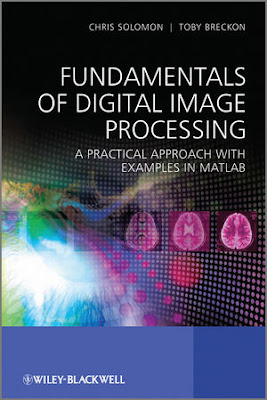
    Fundamentals of Digital Image Processing: A Practical Approach with Examples in Matlab - Chris Solomon, Toby Breckon

    Fundamentals of Digital Image Processing: A Practical Approach with Examples in Matlab 
                                             - Chris Solomon, Toby Breckon 
    This is an introductory to intermediate level text on the science of image processing, which employs the Matlab programming language to illustrate some of the elementary, key concepts in modern image processing and pattern recognition. The approach taken is essentially practical and the book offers a framework within which the concepts can be understood by a series of well chosen examples, exercises and computer experiments, drawing on specific examples from within science, medicine and engineering.
    Clearly divided into eleven distinct chapters, the book begins with a fast-start introduction to image processing  to enhance the accessibility of later topics. Subsequent chapters offer increasingly advanced discussion of topics involving more challenging concepts, with  the final chapter  looking at the application of automated image classification (with Matlab examples) .
    Matlab is frequently used in the book as a tool for demonstrations, conducting experiments and for solving problems, as it is both ideally suited to this role and is widely available. Prior experience of Matlab is not required and those without access to Matlab can still benefit from the independent presentation of topics and numerous examples.
     

    Data Communications and Networking (McGraw-Hill Forouzan Networking) by Behorouz A. Forouzan - 4th Edition-LINKS UPDATED

    Data Communications and Networking (McGraw-Hill Forouzan Networking) - 4th Edition


    As one of the fastest growing technologies in our culture today, data communications and networking presents a unique challenge for instructors. As both the number and types of students are increasing, it is essential to have a textbook that provides coverage of the latest advances, while presenting the material in a way that is accessible to students with little or no background in the field. Using a bottom-up approach, Data Communications and Networking presents this highly technical subject matter without relying on complex formulas by using a strong pedagogical approach supported by more than 700 figures.


    Now in its Fourth Edition, this textbook brings the beginning student right to the forefront of the latest advances in the field, while presenting the fundamentals in a clear, straightforward manner. Students will find better coverage, improved figures and better explanations on cutting-edge material. The "bottom-up" approach allows instructors to cover the material in one course, rather than having separate courses on data communications and networking.

    DOWNLOAD LINK:
    Data Communications and Networking (McGraw-Hill Forouzan Networking) - 4th Edition 

    DJVU Reader Setup Download:
    DJVU Reader

    Thursday, 24 November 2011

    Flash Mobile: Developing Android and iOS Applications (Visualizing the Web) - Matthew David

    Flash Mobile: Developing Android and iOS Applications (Visualizing the Web) 
                                                                      - Matthew David
    Build rich media applications for the iOS and Android platforms with this primer to Flash mobile development. You get all of the essentials-from setting up your development environment to publishing your apps to the Google Market Place/Apple iTunes App Store.
    Develop elementary applications without coding; then realize the power of ActionScript 3 to add rich complexity to your applications. Step-by-step instruction is combined with practical tutorial lessons to deliver a working understanding of the development stages including:
    *Rapid prototyping *Adding interactivity, audio, and video *Employing iOS and Android Interface Calls *Hardware optimization with AIR *Game development; game engines, controlling physics, and 3D *Designing for iPad, Android tablets, and Google TV *Code optimization, testing, and debugging
    User interfaces are presented in full color to illustrate their nuances. The companion website, www.visualizetheweb/flashmobile, includes all of the AS3 code, project files, and a blog to keep you up to date with related news and developments.

    Wednesday, 23 November 2011

    Mechanical Engineering-Tribology In Machine Design - T. A. Stolarski

    Mechanical Engineering-Tribology In Machine Design 
                                                                                    - T. A. Stolarski

    "Tribology in Machine Design is strongly recommended for machine designers, and engineers and scientists interested in tribology. It should be in the engineering library of companies producing mechanical equipment."

    Applied Mechanics Review


    Tribology in Machine Design explains the role of tribology in the design of machine elements. It shows how algorithms developed from the basic principles of tribology can be used in a range of practical applications within mechanical devices and systems.

    The computer offers today's designer the possibility of greater stringency of design analysis. Dr Stolarski explains the procedures and techniques that allow this to be exploited to the full. This is a particularly practical and comprehensive reference source book for the practising design engineer and researcher. It will also find an essential place in libraries catering for engineering students on degree courses in universities and polytechnics. The material is grouped according to applications for ease of use and reference.


    Subject covered from fundamentals to applied methods
    Valuable to both student and professional readers
    Cheaper than competing texts  


    DOWNLOAD LINK: Mechanical Engineering-Tribology In Machine Design - T. A. Stolarski

    Computer Organization and Architecture Designing for Performance (8th Edition) - William Stallings

     Computer Organization and Architecture Designing for Performance (8th Edition)                                                                                                            - William Stallings


    KEY BENEFIT: Learn the fundamentals of processor and computer design from the newest edition of this award winning text.  
    KEY TOPICS: Introduction; Computer Evolution and Performance; A Top-Level View of Computer Function and Interconnection; Cache Memory; Internal Memory Technology; External Memory; I/O; Operating System Support; Computer Arithmetic; Instruction Sets: Characteristics and Functions; Instruction Sets: Addressing Modes and Formats; CPU Structure and Function; RISCs; Instruction-Level Parallelism and Superscalar Processors; Control Unit Operation; Microprogrammed Control; Parallel Processing; Multicore Architecture. Online Chapters: Number Systems; Digital Logic; Assembly Language, Assemblers, and Compilers; The IA-64 Architecture.  
    MARKET: Ideal for professionals in computer science, computer engineering, and electrical engineering.

    DOWNLOAD LINK:  Computer Organization and Architecture Designing for Performance (8th Edition) - William Stallings

    Sunday, 20 November 2011

    Ubuntu Unleashed 2011 Edition: Covering 10.10 and 11.04 (6th Edition) - LINKS UPDATED

    Ubuntu Unleashed 2011 Edition: Covering 10.10 and 11.04 (6th Edition)


    Ubuntu Unleashed 2011 Edition presents advanced coverage of the popular Ubuntu distribution of Linux. Windows users, Mac users, and Linux enthusiasts have been increasingly turning to Ubuntu for a user-friendly and easy-to-use Linux distribution that remains useful to power users.

    This book provides detailed information on installing, using, and administering Ubuntu. You will learn how to set up a workstation or a server, details on Ubuntu’s easy-to-use desktop and productivity software, and you will find topics of interest to both casual and serious developers.

    Ubuntu Unleashed 2011 Edition includes a range of coverage: From the software you need everyday for productivity and enjoyment, to how to configure your Linux desktop to run smoothly, to advanced topics like systems administration and software development, and much more.

    Some books excel at helping beginners take baby steps. There is some beginning material in Ubuntu Unleashed 2011 Edition. However, this book is intended for anyone who wants to move beyond the basics of using Ubuntu into the realm of an intermediate or advanced user.

    • Install and configure Ubuntu
    • Get all your system’s devices and peripherals up and running
    • Configure and customize your graphic user interface
    • Manage Linux services and users
    • Secure your machine and your network from intruders
    • Configure a firewall
    • Share files with Windows users using Samba
    • Get productive with office tools
    • Use multimedia programs
    • Play games
    • Set up and run various types of servers
    • Learn the basics of several programming languages
    • Learn how to write a software application quickly
    • Participate in Ubuntu QA testing
    • Tune your system for maximum performance
    • Learn to manage and compile the kernel and modules

    Ubuntu 10.10 on DVD
    DVD includes the full Ubuntu 10.10 distribution for Intel x86 computers as well as the complete OpenOffice.org office suite and hundreds of additional programs and utilities.
    Free Upgrade!
    Purchase this book anytime in 2011 and receive a free Ubuntu 11.04 Upgrade Kit by mail (U.S. or Canada only) after Ubuntu 11.04 is released.
    See inside back cover for details.

    Category: Operating Systems/Linux
    Covers: Ubuntu 10.10
    User Level: Intermediate—Advanced


    Wednesday, 16 November 2011

    31 Days Before Your CCNA Exam: A Day-by-Day Quick Reference Study Guide - Scott Bennett

    31 Days Before Your CCNA Exam: A Day-by-Day Quick Reference Study Guide 
                                                                      - Scott Bennett
    A day-by-day review guide for the Cisco Networking Academy Program student
    The features of the book empower you to fit exam preparation into an otherwise busy schedule:
    • Visual calendar summarizing each day’s study topic
    • Checklist providing advice for preparation activities leading up to the exam
    • Description of the 640-801 CCNA exam and how to sign up for it, including how to use a course voucher
    • Strategies to be mentally, organizationally, and physically prepared for exam day
    • Conversational tone, which makes your study time more enjoyable
    If you have completed or are about to complete the four courses of the CCNA version 3.1 curriculum in the Cisco Networking Academy Program, you are ready to make your knowledge official with a CCNA certification. 31 Days Before Your CCNA Exam offers you a personable and practical way to understand the certification process and commit to taking the 640-801 CCNA certification exam while the course material is fresh in your mind.
    Use the day-by-day guide and checklist to organize, prepare, and review. The best motivation for studying is scheduling an actual test date, so sign up and declare, “I am going to take the CCNA exam in 31 days, and this is what I will do to prepare leading up to the exam.”
    Each day in this guide breaks down an exam topic into a manageable bit of information to review using short summaries from relevant parts of the four Networking Academy CCNA courses.

    Security Administrator Street Smarts: A Real World Guide to CompTIA Security+ Skills (IN EPUB FORMAT) - David R. Miller, Michael Gregg

    Security Administrator Street Smarts: A Real World Guide to CompTIA Security+ Skills (IN EPUB FORMAT)
      
    Develop the skills you need in the real world Hit the ground running with the street-smart training you'll find in this practical book. Using a "year in the life" approach, it gives you an inside look at the common responsibilities of security administrators, with key information organized around the actual day-to-day tasks, scenarios, and challenges you'll face in the field. This valuable training tool is loaded with hands-on, step-by-step exercises covering all phases of a security administrator's job, including:
    • Designing a secure network environment
    • Creating and implementing standard security policies and practices
    • Identifying insecure systems in current environment
    • Providing training to on-site and remote users

    Secrets and Lies: Digital Security in a Networked World - Bruce Schneier

    Secrets and Lies: Digital Security in a Networked World 
                                                                        - Bruce Schneier
    Whom can you trust? Try Bruce Schneier, whose rare gift for common sense makes his book Secrets and Lies: Digital Security in a Networked World both enlightening and practical. He's worked in cryptography and electronic security for years, and has reached the depressing conclusion that even the loveliest code and toughest hardware still will yield to attackers who exploit human weaknesses in the users. The book is neatly divided into three parts, covering the turn-of-the-century landscape of systems and threats, the technologies used to protect and intercept data, and strategies for proper implementation of security systems. Moving away from blind faith in prevention, Schneier advocates swift detection and response to an attack, while maintaining firewalls and other gateways to keep out the amateurs. Newcomers to the world of Schneier will be surprised at how funny he can be, especially given a subject commonly perceived as quiet and dull. Whether he's analyzing the security issues of the rebels and the Death Star in Star Wars or poking fun at the giant software and e-commerce companies that consistently sacrifice security for sexier features, he's one of the few tech writers who can provoke laughter consistently. While moderately pessimistic on the future of systems vulnerability, he goes on to relieve the reader's tension by comparing our electronic world to the equally insecure paper world we've endured for centuries--a little smart-card fraud doesn't seem so bad after all. Despite his unfortunate (but brief) shill for his consulting company in the book's afterword, you can trust Schneier to dish the dirt in Secrets and Lies.

    Thursday, 3 November 2011

    101 Internet Businesses You Can Start from Home by C.A.Susan Sweeney

    101 Internet Businesses You Can Start from Home by C.A.Susan Sweeney

    Title: 101 Internet Businesses You Can Start from Home by C.A.Susan Sweeney

    101 Internet Businesses Description:  101 Internet Businesses You Can Start from Home by C.A.Susan Sweeney - Written for those who want to break away from rigid schedules, unappreciative bosses, and soul-sapping commutes, this book puts prospective Internet entrepreneurs on the road to success by offering an analysis of Internet mechanics and commerce and providing profiles of successful Internet businesses. Containing more than just technical information, this manual also helps the entrepreneur prioritize business goals and evaluate comfortable levels of risk, ensuring that the chosen business matches the aspirations of the entrepreneur. Each of the 101 business profiles includes promotion techniques for helping these start-ups get on the road to success, and a password for access to the companion website is provided - 101 Internet Businesses You Can Start from Home by C.A.Susan Sweeney

    101 Internet Businesses Size: 1.75 MB

    101 Internet Businesses No. of Pages: 329

    101 Internet Businesses Type:  101 Chapters


    101 Internet Businesses Download Link: 
     101 Internet Businesses You Can Start from Home by C.A. Susan Sweeney 

    Hacking Exposed Windows: Microsoft Windows Security Secrets and Solutions, Third Edition

    Hacking Exposed Windows: Microsoft Windows Security Secrets and Solutions, Third Edition"Securing Windows begins with reading this book." –James Costello (CISSP) IT Security Specialist, Honeywell
    Meet the challenges of Windows security with the exclusive Hacking Exposed "attack-countermeasure" approach. Learn how real-world malicious hackers conduct reconnaissance of targets and then exploit common misconfigurations and software flaws on both clients and servers. See leading-edge exploitation techniques demonstrated, and learn how the latest countermeasures in Windows XP, Vista, and Server 2003/2008 can mitigate these attacks. Get practical advice based on the authors' and contributors' many years as security professionals hired to break into the world's largest IT infrastructures. Dramatically improve the security of Microsoft technology deployments of all sizes when you learn to:
    • Establish business relevance and context for security by highlighting real-world risks
    • Take a tour of the Windows security architecture from the hacker's perspective, exposing old and new vulnerabilities that can easily be avoided
    • Understand how hackers use reconnaissance techniques such as footprinting, scanning, banner grabbing, DNS queries, and Google searches to locate vulnerable Windows systems
    • Learn how information is extracted anonymously from Windows using simple NetBIOS, SMB, MSRPC, SNMP, and Active Directory enumeration techniques
    • Prevent the latest remote network exploits such as password grinding via WMI and Terminal Server, passive Kerberos logon sniffing, rogue server/man-in-the-middle attacks, and cracking vulnerable services
    • See up close how professional hackers reverse engineer and develop new Windows exploits
    • Identify and eliminate rootkits, malware, and stealth software
    • Fortify SQL Server against external and insider attacks
    • Harden your clients and users against the latest e-mail phishing, spyware, adware, and Internet Explorer threats
    • Deploy and configure the latest Windows security countermeasures, including BitLocker, Integrity Levels, User Account Control, the updated Windows Firewall, Group Policy, Vista Service Refactoring/Hardening, SafeSEH, GS, DEP, Patchguard, and Address Space Layout Randomization

    Download Here
    Password: knowfree.net

    Wednesday, 2 November 2011

    Java Servlet & JSP Cookbook - Bruce W. Perry

    Java Servlet & JSP Cookbook 
                                                           - Bruce W. Perry
    With literally hundreds of examples and thousands of lines of code, the Java Servlet and JSP Cookbook yields tips and techniques that any Java web developer who uses JavaServer Pages or servlets will use every day, along with full-fledged solutions to significant web application development problems that developers can insert directly into their own applications.
    Java Servlet and JSP Cookbook presents real-world problems, and provides concise, practical solutions to each. Finding even one tested code "recipe" that solves a gnarly problem in this comprehensive collection of solutions and best practices will save hours of frustration--easily justifying the cost of this invaluable book.
    But "Java Servlet and JSP Cookbook" is more than just a wealth of cut-and-paste code. It also offers clear explanations of how and why the code works, warns of potential pitfalls, and directs you to sources of additional information, so you can learn to adapt the problem-solving techniques to similar situations.
    These recipes include vital topics like the use of Ant to setup a build environment, extensive coverage of the WAR file format and web.xml deployment descriptor, file-uploading, error-handling, cookies, logging, dealing with non-HTML content, multimedia, request filtering, web services, I18N, web services, and a host of other topics that frustrate even the most seasoned developers.
    For Java web developers of all levels who are eager to put into practice the theory presented in other API-focused books, the solutions presented in this practical book will prove invaluable over and over again. This is painless way for less experienced developers who prefer to learn by doing to expand their skills and productivity, while accomplishing practical solutions to the pressing problems they face every day.

    Beginning Visual Basic 2010 (Wrox Programmer to Programmer) - Thearon Willis, Bryan Newsome

    Beginning Visual Basic 2010 (Wrox Programmer to Programmer)
                                       - Thearon Willis, Bryan Newsome
    This book is designed to teach you how to write useful programs in Visual Basic 2010 as quickly and easily as possible.
    There are two kinds of beginners for whom this book is ideal:
    • You're a beginner to programming and you've chosen Visual Basic 2010 as the place to start. That's a great choice! Visual Basic 2010 is not only easy to learn, it's also fun to use and very powerful.
    • You can program in another language but you're a beginner to .NET programming. Again, you've made a great choice! Whether you've come from Fortran or Visual Basic 6, you'll find that this book quickly gets you up to speed on what you need to know to get the most from Visual Basic 2010.
    Visual Basic 2010 offers a great deal of functionality in both tools and language. No one book could ever cover Visual Basic 2010 in its entirety—you would need a library of books. What this book aims to do is to get you started as quickly and easily as possible. It shows you the roadmap, so to speak, of what there is and where to go. Once we've taught you the basics of creating working applications (creating the windows and controls, how your code should handle unexpected events, what object-oriented programming is, how to use it in your applications, and so on) we’ll show you some of the areas you might want to try your hand at next:
    • Chapters 1 through 9 provide an introduction to Visual Studio 2010 and Windows programming. These chapters will help you install the Visual Studio 2010 IDE you'll use to create Visual Basic 2010 applications and learn your way around the interface. You'll be introduced to the .NET Framework and the CLR (Common Language Runtime). You'll learn to use variables, data types, comments, methods, and control software flow with the If statement and loops. You'll work with data in arrays, enumerations, constants, structures, ArrayLists, Collections, and tables. Chapter 6 provides an introduction to XAML and Windows Presentation Foundation (WPF) programming. XAML and WPF are the most recent addition to how VB programmers create user interfaces for their applications. You'll also work with events, create toolbars, buttons, forms, display dialog boxes, and create menus.
    • Chapter 10 provides an introduction to application debugging and error handling.
    • Chapters 11 through 13 provide an introduction to object-oriented programming (OOP) and building objects. You'll use classes, learn about reusability, work with constructors and inheritance, and see .NET Framework classes and namespaces. You’ll learn to work with OOP memory management, class libraries, you'll register assemblies, and see how to use third party class libraries.
    • Chapter 14 provides an introduction to creating Windows Forms user controls. While WPF user interfaces are newer, Windows forms are still in widespread use. You'll create and test controls and work with their properties.
    • Chapters 15 and 16 provide an introduction to programming with databases and covers Access, SQL Server, and ADO.NET. The chapters walk you through the SQL SELECT statement, Access queries, data access components, and data binding.
    • Chapters 17 and 18 provide an introduction to Dynamic Data Web Sites and ASP.NET and show you how to write applications for the Web. You'll work with the most current ASP.NET 4 web techniques in Visual Studio 2010.
    • Chapter 19 provides a brief introduction to XML, a powerful tool for integrating your applications with others—regardless of the language they were written in.
    • Chapter 20 introduces you to deploying applications using ClickOnce technology.

    Monday, 31 October 2011

    Programming Windows Server 2003


    Publisher: Manning Publications
    Number Of Pages: 350
    Publication Date: 2003-09-01
    Sales Rank: 600182
    ISBN / ASIN: 1930110987
    EAN: 9781930110984
    Binding: Paperback
    Manufacturer: Manning Publications
    Studio: Manning Publications
    Average Rating: 4

    Book Description: )Designed to help developers understand the new features of Windows Server 2003, this book demonstrates how to apply these features to new and existing .NET applications. A sample application and several different phases of the software development life cycle are followed. The new features of the .NET framework 1.1, Internet Information Services 6.0, and COM+ 1.5 are covered, as are the best practices of writing ASP.NET applications. The ways in which applications can take advantage of these features to improve performance and reliability are also discussed. Information on XML web services and how these services can use Windows Server 2003’s UDDI Services for an enterprise-wide implementation of web services is included. In addition, how to best secure applications by applying different techniques that are available both in Windows Server 2003 and the .NET Framework is discussed.

    Windows Presentation Foundation Unleashed (WPF) (Unleashed)


    Publisher: Sams
    Number Of Pages: 656
    Publication Date: 2006-12-21
    Sales Rank: 2165
    ISBN / ASIN: 0672328917
    EAN: 9780672328916
    Binding: Paperback
    Manufacturer: Sams
    Studio: Sams Book Description: )
    Windows® Presentation Foundation Unleashed
    Adam Nathan
    with Daniel Lehenbauer, Lead Developer Responsible for WPF 3D
    Printed entirely in color, with helpful figures and syntax coloring to make code samples appear as they do in Visual Studio.
    Windows Presentation Foundation (WPF) is a key component of the .NET Framework 3.0, giving you the power to create richer and more compelling applications than you dreamed possible. Whether you want to develop traditional user interfaces or integrate 3D graphics, audio/video, animation, dynamic skinning, rich document support, speech recognition, or more, WPF enables you to do so in a seamless, resolution-independent manner. Windows Presentation Foundation Unleashed is the authoritative book that covers it all, in a practical and approachable fashion, authored by .NET guru and Microsoft developer Adam Nathan.
    · Covers everything you need to know about Extensible Application Markup Language (XAML)
    · Examines the WPF feature areas in incredible depth: controls, layout, resources, data binding, styling, graphics, animation, and more
    · Features a chapter on 3D graphics by Daniel Lehenbauer, lead developer responsible for WPF 3D
    · Delves into non-mainstream topics: speech, audio/video, documents, bitmap effects, and more
    · Shows how to create popular UI elements, such as features introduced in the 2007 Microsoft Office System: Galleries, ScreenTips, custom control layouts, and more
    · Demonstrates how to create sophisticated UI mechanisms, such as Visual Studio-like collapsible/dockable panes
    · Explains how to develop and deploy all types of applications, including navigation-based applications, applications hosted in a Web browser, and applications with great-looking non-rectangular windows
    · Explains how to create first-class custom controls for WPF
    · Demonstrates how to create hybrid WPF software that leverages Windows Forms, ActiveX, or other non-WPF technologies
    · Explains how to exploit new Windows Vista features in WPF applications
    Register your book at www.samspublishing.com/register for access to download all examples and source code presented in this book.
    Category: Windows Programming
    Covers: Windows Presentation Foundation (WPF), .NET Framework

    Your Visual Blueprint for Building Versatile Programs on the .NET Framework


    ISBN: 0764536494

    Title: VB.NET: Your Visual Blueprint for Building Versatile Programs on the .NET Framework

    Author: Richard Bowman

    Publisher: Hungry Minds

    Publication Date: 2002-01-15

    Number Of Pages: 352

    Average Amazon Rating: 4.0

    Each step in this great guide is displayed with callouts so you can see exactly where the action takes place on the screen. VB.NET functions are thoroughly covered, including designing forms and controls, using multimedia and databases, integrating VB.NET with ASP.NET, and creating server-side Web applications. This book also includes a special appendix about Web and Windows forms reference, ADO.NET, and ASP.NET.

    Related Posts Plugin for WordPress, Blogger...